 2 weeks ago
12
2 weeks ago
12 Former judge Baka elected new Hungarian president in another break from Orbán era
Former ECtHR and Hungarian Supreme Court judge András Baka has been elected the new Hungarian president.
146 votes were cast: 140 in favour, and six against.
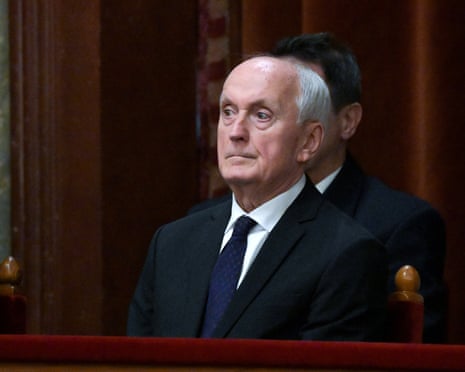
72-year-old Baka is another example of the new government’s clear break with the Orbán era: the lawyer was removed from the post of the president of the Supreme Court in 2011 by the then prime mnister, three years before his term was set to expire. He later won a case at the European Court of Human Rights against Hungary.
In his acceptance speech, Baka said he believed Hungary “reached a period in its history when a serious reflection is needed about the functioning of the state,” after the last two decades of “a serious crisis” under the previous government and with deep societal divisions.
He will replace Viktor Orbán loyalist Tamás Sulyok who stood down – or was effectively removed – from the post last month.
Key events
Closing summary

Jakub Krupa
And, on that note, we will be closing the blog for today.
Former ECtHR and Hungarian supreme court judge András Baka has been elected the new Hungarian president in another break with Viktor Orbán era (13:14, 15:15, 15:26).
Baka will replace an Orbán loyalist, Tamás Sulyok, who stepped down last month after signing a constitutional amendment passed by the ruling Tisza party of the prime minister, Péter Magyar.
Baka was removed by Orbán as the head of the Hungarian Supreme Court in 2011, and later won a case on unfair dismissal at the European Court of Human Rights.
In his acceptance speech, Baka warned that “we cannot build the new Hungary on revenge” (15:43), as he outlined his vision for performing the largely ceremonial role.
In other news,
Spanish foreign minister José Manuel Albares urged migrants to “not risk their lives” and abandon any plans to force their way through the Spanish-Moroccan border, as he pledged that “every last person” crossing the border will be returned to their place of origin (12:59).
Latvia said a tunnel had been discovered under the border with Belarus and announced plans to combat networks that it says are helping a growing number of migrants cross the frontier illegally, following similar concern in neighbouring Lithuania (12:05).
New Eurostat data showed 4.41 million non-EU citizens who fled Ukraine had temporary protection status in the EU at the end of June 2026 (14:34).
The blog will be start a bit later than usual tomorrow as we will focus on the solar eclipse seen in various parts of Europe. Make sure to tune in and follow our coverage.
If you have any tips, comments or suggestions, email me at jakub.krupa@theguardian.com.
I am also on Bluesky at @jakubkrupa.bsky.social and on X at @jakubkrupa.
Jakub Krupa
Be in no doubt: we will obviously bring you the live coverage of tomorrow’s solar eclipse here, on Europe Live.
Europe’s total solar eclipse: the best place to see it and how to view it safely
Nicola Davis and Oliver Holmes
Tomorrow’s total eclipse will be the first in mainland Europe in two decades.
A wide band of north and central Spain, plus a sliver of Portugal and parts of Greenland and Iceland will experience a rare total eclipse. The light of the setting sun will be virtually blocked out across much of western Europe, including the UK, France, Belgium, Switzerland and northern Italy.
Solar eclipse in SpainThe last event of this kind visible from the UK occurred in 1999, when parts of Devon and Cornwall were in the path of totality. The next total solar eclipse visible in the UK is not due to occur until 2090.
Hotel prices in Europe jump before total solar eclipse
Ahead of tomorrow’s solar eclipse – which will be probably best seen in Iceland and Spain, but should also give us some stunning visuals in the UK – hotel prices have surged in key European cities as hundreds of thousands of tourists flock to see the first total eclipse visible from the continent this century.
Solar eclipse mapIceland’s capital, Reykjavík, has seen one of the biggest jumps in hotel room prices, being one of the few accessible locations to see the full eclipse before evening on Wednesday, Kalyeena Makortoff reports.
Spain is also steeling itself for an influx of tourists, as one of the best places on the European continent to view the total solar eclipse. The finance ministry said on Monday that it expected 460,000 overseas tourists to visit specifically to see the eclipse.
However, authorities in Spain are worried about an increased risk of fires, with police expecting 1.5m more car journeys than usual on Wednesday. They have warned that extraordinarily dry temperatures mean the smallest spark could lead to devastating forest fires, while traffic could end up blocking access for emergency vehicles if fires break out in rural areas.
EU wants to 'positively advance' closer ties with UK, Irish minister says

Lisa O’Carroll
In other news…
The EU wants to “positively advance” closer relations with the UK that can deliver “for business, young people” and shared security interests, Ireland’s Europe minister has said.
Thomas Byrne was speaking after an introductory call on behalf of the EU presidency with the UK’s new European relations minister Hamish Falconer on Tuesday (11:08).
He also hinted at new deals on defence and security revealing they discussion the importance of the UK participation in the Ukraine support loans.
“Exploring further areas of cooperation in the area of security and defence is critical to protecting the European continent,” said Byrne.
As holder of the rotating EU presidency the Irish government is currently driving the EU agenda with closer ties with the UK on the priority list for this year.
“We discussed our joint commitment to positively advancing the EU-UK relationship. This is in our shared interests when it comes to delivering for business, young people and our security.
Ireland is ambitious in supporting the strongest possible EU-UK relationship, so that the benefits can be felt by citizens across these islands, and across the EU. A successful and balanced second EU-UK Summit is key to supporting this partnership.”
Guess it’s worth noting that Baka was Péter Magyar’s second pick for the post, as his original candidate, chess legend Judit Polgár, declined the offer saying she “did not feel enough strength within me to take on the historic responsibility of uniting a divided nation.”
And some other more unusual candidates were also floated on social media…
'We cannot build the new Hungary on revenge,' new president tells
In a deeply intellectual acceptance speech, Baka talks about the legacy of Orbán era, talking how the previous administration pitted Budapest against the rest of the country, young versus old, and majorities versus minority, undermining people’s trust to each other.
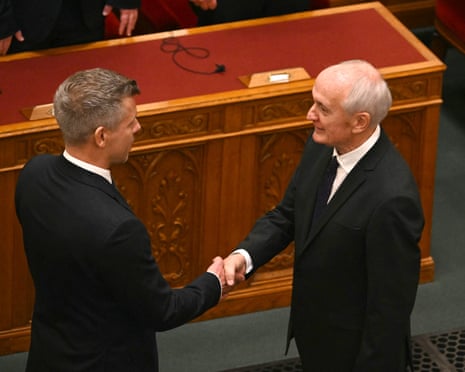
“They wanted to make us believe that anyone who thinks differently is not simply wrong, but an enemy,” he says.
“However, this country cannot build a common future while its citizens see each other as enemies. Therefore, the task before us requires both justice and self-restraint,” he says.
He stresses that “political change cannot mean that from now on, different people must fear others, be silent or feel like outsiders in their own country.”
“One thing is certain: we cannot build the new Hungary on revenge.”
He says the country needs more than just a favourable election result to restore the rule of law, as it needs to rebuild “a democratic and functioning constitutional culture” in which “the limitation of [executive] power is not an obstacle,” and which enables healthy criticism and compromise without anyone branding it an act of betrayal or a sign of weakness.
He says that as a president he will be neutral in terms of party politics, but not in terms of values, as he will defend “necessarily diverse” views of the public.
He also says that any new constitution needs to be built with a long-term thinking in mind, and not to serve “the momentary majority.” If the government were to do that, they would be “making the same mistake the consequences of which we are now trying to resolve,” he says.
Baka also talks about the importance of representing Hungary abroad, and restoring its relations with Europe and other allies. He says it’s the responsibility of the government to lead on that point, but stresses Hungary’s cultural and historical ties with Europe.
“Hungary’s place in Europe is not a momentary decision of the current government, but a consequence of our history, culture and interests.”
Interestingly, he also specifically references his duties towards the ethnic Hungarians who live beyond the country’s borders, a regular point of contention with other countries, including Ukraine and Slovakia.
He ends by making a point that the state’s first task is to serve its people – and gets warm reception from the gathered MPs (but, remember, the opposition Fidesz party is not there).
Former judge Baka elected new Hungarian president in another break from Orbán era
Former ECtHR and Hungarian Supreme Court judge András Baka has been elected the new Hungarian president.
146 votes were cast: 140 in favour, and six against.
72-year-old Baka is another example of the new government’s clear break with the Orbán era: the lawyer was removed from the post of the president of the Supreme Court in 2011 by the then prime mnister, three years before his term was set to expire. He later won a case at the European Court of Human Rights against Hungary.
In his acceptance speech, Baka said he believed Hungary “reached a period in its history when a serious reflection is needed about the functioning of the state,” after the last two decades of “a serious crisis” under the previous government and with deep societal divisions.
He will replace Viktor Orbán loyalist Tamás Sulyok who stood down – or was effectively removed – from the post last month.
Hungarian parliament votes to elect the country's new president
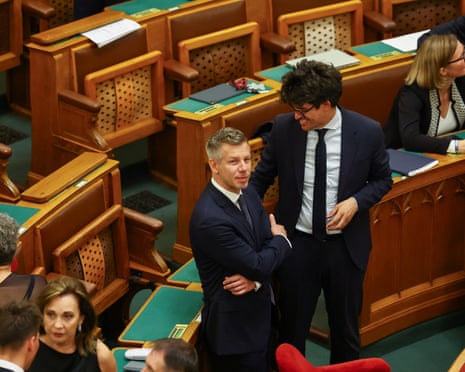
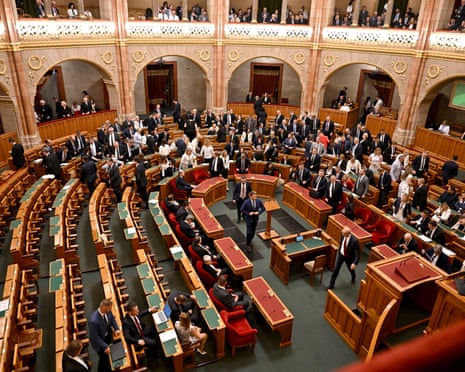
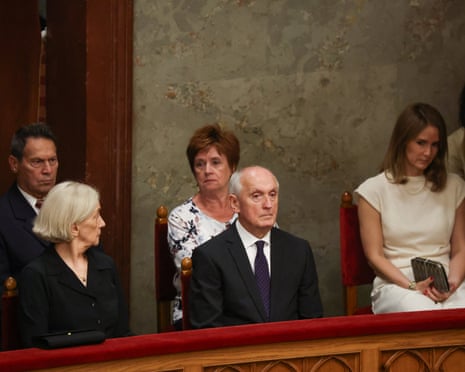
As flagged earlier (13:14), the Hungarian parliament is now voting to elect a new president, with the government-backed former judge András Baka the only candidate available.
We should get the result soon, and given the main opposition party, Viktor Orbán’s Fidesz, is boycotting the vote there are no prizes for guessing what’s going to happen.
4.4 million people who fled Ukraine had temporary protection status end of June, data show
New Eurostat data showed 4.41 million non-EU citizens who fled Ukraine had temporary protection status in the EU at the end of June 2026.

This number has gone up by 0.6%, or 24,000, over the last year.
Germany (1.3m), Poland (1m) and Czechia (400,000) host the three largest groups of people using the status to stay in the bloc.
Eurostat data showed that adult women made up 43% of the total, with minors at around 30%, and adult men at 27%.
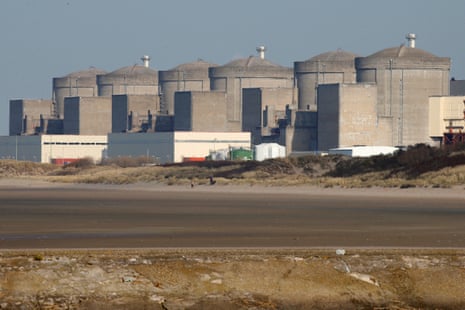
In France, energy firm EDF has reported that a nuclear plant in the north of the country shut down three reactors after a swarm of jellyfish clogged pumps used to cool the units.
Three reactors were taken offline on Monday and output at a fourth was cut by half, EDF said in a statement, leaving just one operating at full capacity.
“This situation has no impact on the safety of the facilities, the safety of personnel, or the environment,” AFP reports EDF said.
The Gravelines nuclear power plant, near the northern city of Dunkirk, is the largest in Western Europe, with six 900-megawatt reactors. The nuclear power plant was also temporarily taken offline a year ago after jellyfish clogged its seawater pumping stations.
Striking images across the news wires today show the many ways that heat is affecting the continent this summer, with rivers at record lows and tourists resorting to ingenious methods to keep themselves cool while still seeing the sights.
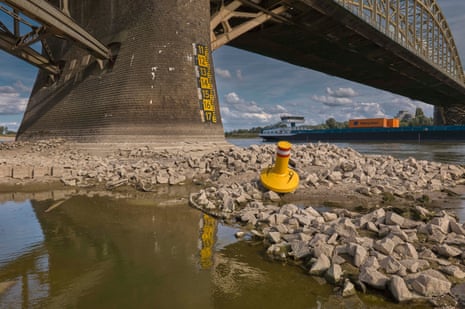
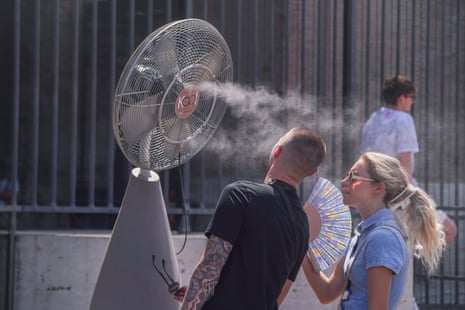
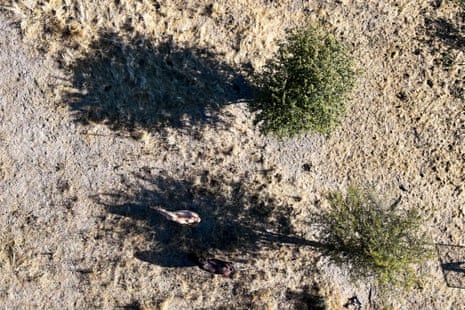
Italy’s coalition League party will propose a three-year levy on the country’s ten largest banks in the 2027 budget to help support public finances, deputy prime minister Matteo Salvini was quoted as saying on Tuesday.
Reuters reports Salvini said “We as the League will ask, and I am convinced the entire coalition will support us, for a three-year contribution from the top ten Italian banks.”
Salvini said that if annual profits in the banking sector came in at around €30bn, the government should seek “5% a year for three years”.
Former Supreme Court, ECHR judge Baka set to be elected new Hungarian president in another break with Orbán era
As I flagged earlier, Hungarian lawmakers on Tuesday are expected to elect former supreme court chief András Baka, who was fired under ex-premier Viktor Orbán, as the country’s next head of state.
Hungary’s last president and Orbán loyalist, Tamás Sulyok, stepped down last month after signing a constitutional amendment passed by the ruling Tisza party of the prime minister, Péter Magyar.
The appointment of Baka, a senior judge who also served on the European Court of Human Rights, is intended as another break with the Orbán era.
“After many years, Hungary will once again have a true head of state,” Magyar said in a post of X this afternoon.
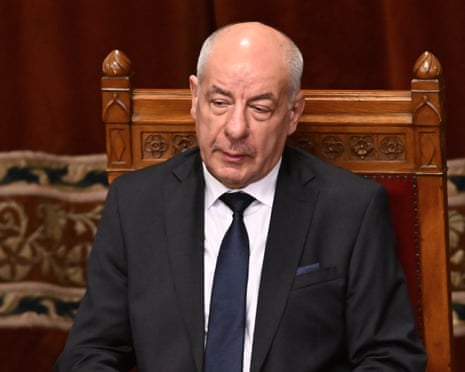
Tisza has the two-thirds parliamentary majority required to elect Baka on the first round without any opposition support, AFP noted.
The vote is expected in under an hour from now.
The commission also finds itself in a tricky position amid escalating border row between Spain and Italy, with both countries reinstating border controls against each other in the aftermath of the border crisis in Ceuta.
A commission spokesperson said the two countries confirmed their arrangements were “temporary,” with no “lasting” effect expected on the Schengen area.
But there is no hint at the moment that they may lift the controls very soon, it seems.
And that’s all from the commission’s briefing.