
 1 year ago
26
1 year ago
26 The idea of sexual addiction lives almost squarely in the straightest of boxes. We assume it’s a guy who took pornography too far or gets caught acting out sexually, maybe someone whose wife or girlfriend has finally had enough and insisted he get help before she’s out the door.
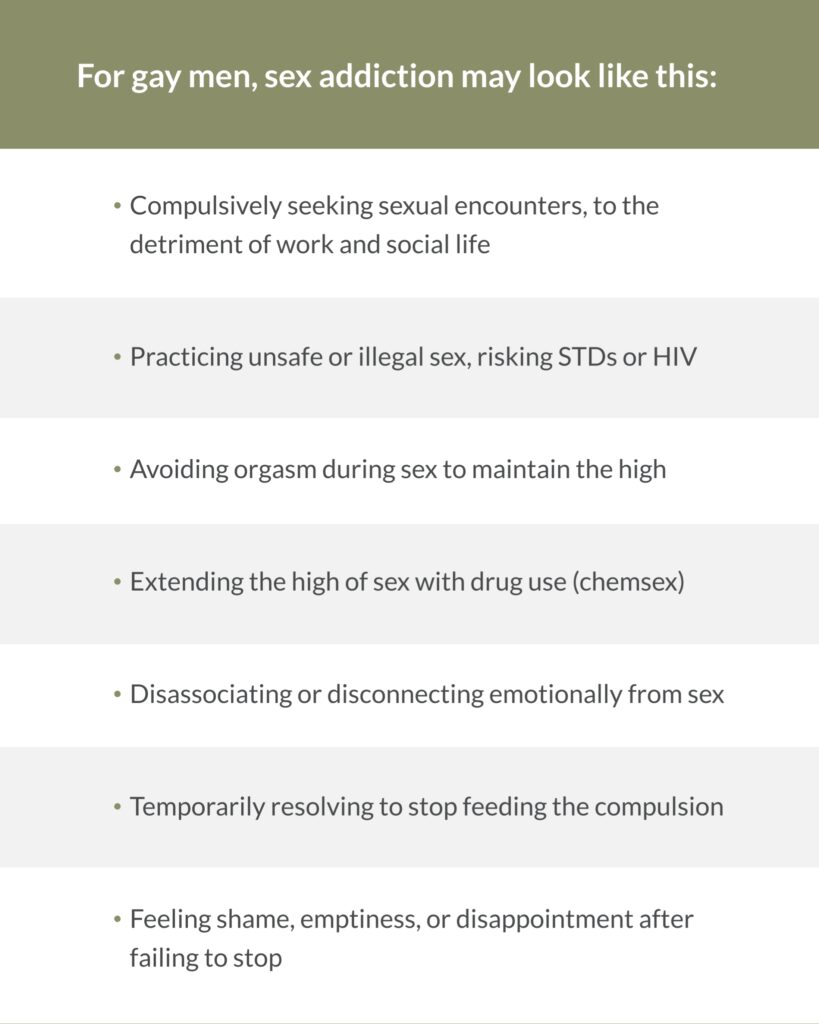
But sex addiction (aka hypersexuality) isn’t limited to heterosexual men. Not by a long shot.
In the gay community, where hypersexuality may be mistaken for the norm, it can be difficult to know when there’s actually a problem. “Gay culture is sex obsessed,” writes Jay Sassieni in Urban Connections. “According to the apps, magazines, porn sites and sex-clubs that surround us — a gay man’s sole purpose in life is to have as much sex as possible.”
And with apps like Grindr serving as an underground digital bathhouse for more than 12 million monthly active users, it’s never been easier to engage in anonymous sex, nor more difficult to stop when it becomes all-consuming.
In the gay community, where sex addiction may be mistaken for the norm, it can be difficult to know when there’s actually a problem.
The Elephant In the Room
So why in such a highly sexualized lifestyle does nobody talk about gay sex addiction?
Because in LGBTQ+ culture, the stigma of long-held societal assumptions restricting what is acceptable behavior, sexual and otherwise, makes any concept of addiction feel negative and accusatory.
Sexual freedom is important in the gay community, a core principle in which the community takes great pride. Add to that the shame, fear, and rejection many in this community have experienced coming to terms with their sexuality, and the idea of anything that feels like morality policing may trigger an immediate defensive response.
And yet, it stands to reason that in a world where having as much sex as possible is the norm, at some point, the pursuit of excess creates conditions ripe for gay hypersexuality.
Sex Addiction Is Not About Sex
So what is normal, anyway? Even experts don’t always agree on what is sexually “normal,” but they do agree that — gay or straight — sex becomes an addiction when the need or pursuit of sex begins to negatively impact your life.
As stated on our online Sex Addiction Issues page, “There is no single number of partners or sex acts that make someone a sexual addict. Instead, sex is the food or drug in other addictions that provides the ‘high’ needed to feel normal.”
Barriers to Intimacy in Gay Men
For gay men, emotional intimacy can be even more problematic. Why? Because an essential part of survival for gay youth is in hiding and building walls of protection. “This is a time when we’re learning, as young people, what intimacy and safety is,” says David Stuart, a UK sexual health clinic manager featured in Attitude. “Then, overnight, we’re sexually active adults in Grindr-Land, trying to incorporate intimacy into our sex and romantic lives … but with no frame of reference for how to do this.”
Social Life and Sex Collide
In a culture that both “socializes and sexualizes together,” according to John Pachankis, a LGBTQ mental health expert at the Yale School of Public Health, gay men experience a world that is often even more “status-driven, competitive, hierarchical, and exclusionary,” making real relationships harder to find. Isolation and loneliness feeds the need for sex, even for sex’s sake.
Mental Health Toll of Disconnection
Gay sexual addiction often exists in tandem with other mental health issues. Sexual freedom, without the ability to feel human connection with a partner who knows and values you, can lead to anxiety and depression, and sometimes even suicide.
According to estimates shared by Vox, 50% of gay men suffer from depression, and since 2007, more have died from suicide than from HIV. Gay men seek out sexual attention to distract from painful emotions and past traumas that lie beneath the surface. But eventually, they find it’s only a temporary fix.
Gay men seek out sexual attention to distract from painful emotions and past traumas that lie beneath the surface. But eventually, they find it’s only a temporary fix.
Treating Sex Addiction for Gay Men
Recovery from sex addiction is possible, and treatment is most effective when it addresses both the compulsive behaviors and the unique challenges gay men may face. An affirming, integrated approach helps reduce shame, build healthier coping skills, and create space for genuine connection.
Affirming, Inclusive Care
Treatment works best when it acknowledges the unique challenges gay men may face, including stigma, shame, and identity-related stress. Working with LGBTQ+–affirming providers creates a safe space to explore both addiction and underlying issues without judgment.
Evidence-Based Therapies
Cognitive Behavioral Therapy (CBT) helps identify triggers and replace harmful thought patterns with healthier coping strategies. Individual and group therapy sessions can address compulsive behaviors while building skills for intimacy, trust, and emotional regulation.
The Role of Community Support
Peer support groups designed to include gay men can reduce feelings of isolation and provide accountability. Sharing experiences with others who understand can be an important step toward lasting recovery.
Building a Healthier Future
With compassionate care, men can break the cycle of shame and compulsive behaviors. Recovery makes it possible to rebuild trust, strengthen relationships, and develop a more balanced, fulfilling connection to sexuality.
Unlearn the Instinct to Hide
Whether gay or straight, when sex addiction and compulsion begins compromising your ability to function as a healthy adult, it’s time to seek help.
But for gay men, seeking treatment may, at best, feel counter to gay culture. It may feel like a betrayal of their identity, and at worst, stigmatize and trigger negative emotions and painful past traumas.
At Gentle Path at The Meadows, we understand the complex nature of male sexual addiction, and the unique challenges of gay men’s sex addiction treatment. It’s not easy learning to dismantle the walls of emotional protection needed to survive in a hostile world. But until you begin to understand the unsafety of hiding, you will never begin on the path to the emotional healing that’s necessary to fully know yourself. We can give you the tools to stop hiding and to grow your capacity for emotional connection.
This journey to sexual healing makes healthier gay relationships a reality. We are here to help, when you’re ready.
FAQs About Sex Addiction in Gay Men
Do gay men have a higher sex drive?
No, being gay does not automatically mean someone has a higher sex drive. Sex drive varies from person to person and is influenced by factors like biology, mental health, relationship dynamics, and life stress, not sexual orientation.
What are the stages of sex addiction for gay men?
The stages are similar to what anyone with sex addiction may experience: an increasing preoccupation with sexual thoughts, rituals or planning around sexual activity, engaging in the behavior, and then feeling guilt, shame, or distress afterward. Over time, this cycle can escalate, with behaviors becoming riskier or harder to control without support.
What causes sex addiction in males?
Sex addiction can develop from a mix of biological, psychological, and social factors. Trauma, attachment issues, co-occurring mental health conditions, or using sex as a way to cope with stress or loneliness can all contribute to compulsive patterns of sexual behavior.
Is sex addiction different for LGBTQ+ people?
The core experience of sex addiction is the same, but LGBTQ+ people may face added layers of stigma, secrecy, or stress around sexuality and identity. These pressures can intensify feelings of shame and make it harder to seek help, which is why affirming, inclusive treatment is especially important.


